
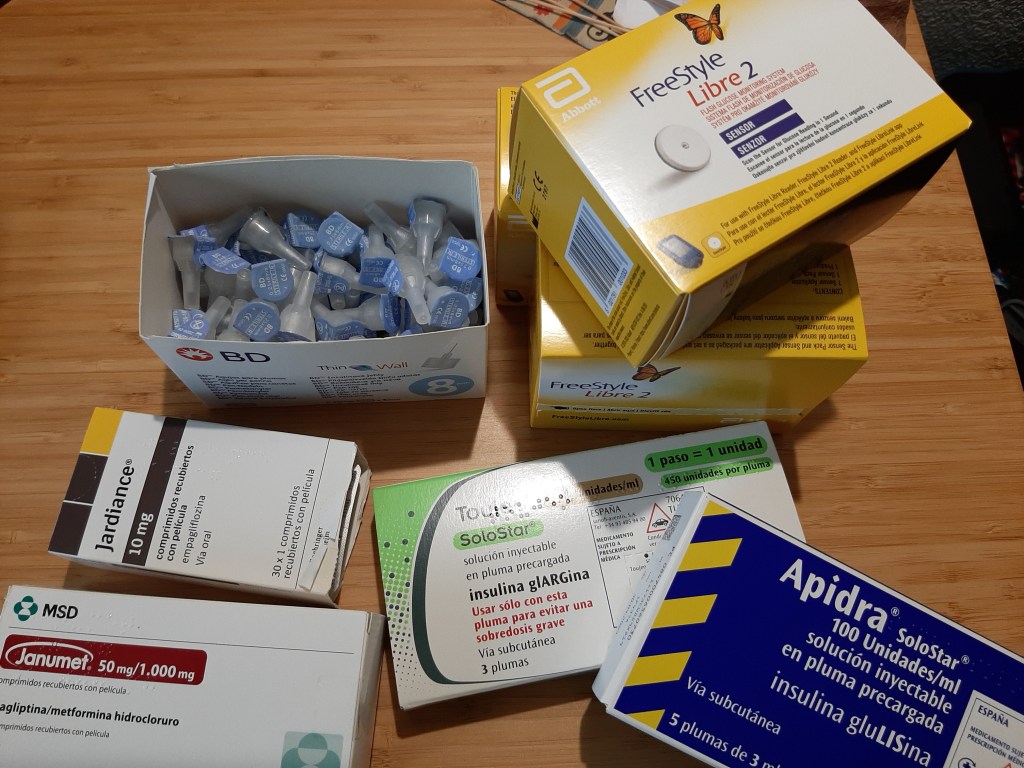
Diabetes turns glucose reading into an art form. You can prick your fingers, you can wear a CGM, but after a while you get to know your rhythm, when you’ll be up and when you’ll be down. But sports can really throw things off, to the point where you feel one way but your readings are heading in the other direction. Multiple trainings in a single day, or a race, can really make you long for the blissful innocence of pre-diabetes.
The goal for a diabetic is to keep things steady throughout the day and night. But this gets thrown out the window when it comes to training, as you need to really up the intake to fuel for long sessions. I’ve had plenty of morning swim sessions where measurements before and after the session have dropped by 130, 140, sometimes higher. I’ll immediately have something to drink and a protein bar to bring things back up from around 70, but I’ll usually overdo it and I’ll shoot back up over 200. Then I’ll have to take some Apidra before lunch to bring things down again. Then back up with lunch, but hopefully not too much this time. And then I’ll need to top up the tank before a run session, only to see it plummet after which it rebounds.
Bike sessions are usually easier to regulate, as the intensity is usually not the same and I have time to check my glucose during the ride. I can also bring a lot of snacks with me to keep things from dropping incessantly, and more regular fueling during a three or four hour ride works for me and my levels. It works well.
Race day is another story. During a shorter race, no problem, but for a half or full ironman mucho planning is needed. I’ll want to go into the day with my glucose a bit high, as I know it’ll come down during the swim and I don’t want to bonk just as I start the bike. I’ll keep multiple snacks ready to go, mostly gels, and I’ll keep grabbing drinks from aid stations as the day progresses. Depending upon what food is available during the run, I’ll gobble as much as possible and try to stay hydrated as I know my glucose will be down when I check my numbers later. For now, all consumables are good.
Its like we are doing two races at the same time, always watching the numbers – one involving the time from point A to point B, like the other racers, and the other involving pinning specific glucose numbers to different points of the race. Remembering what I have had to eat and drink and when that was, and overall how I was feeling, are interesting to see in the context of glucose readings from a CGM. One thing to keep in mind – CGM readings, at least the ones that I do, must happen at least every eight hours. For a half ironman no problem, but for a full… I think there will be some gaps in the readings. Unless I suddenly get a lot faster in my 50s…
 Tridiabet